We have the northside of Brisbane covered when it comes to your battery requirements so drop into one of our main stores at Brendale, Caboolture or North Lakes.

Stop-start car batteries: AGM vs EFB differences explained
Date
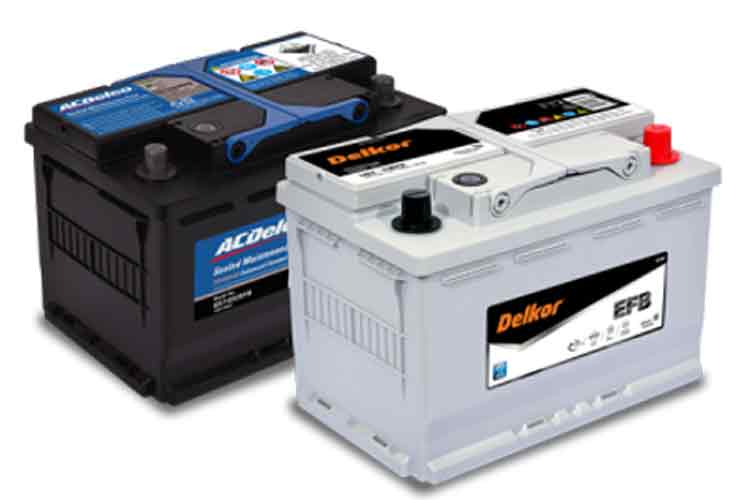
Modern cars are packed with more "wizzbang tech" than ever before, and if you drive a late-model ride around Brisbane’s northside, there is a very good chance it features stop-start technology. This clever fuel-saving system cuts your engine when you come to a standstill at the lights – say, on Gympie Road in Strathpine or outside our Caboolture store – and fires it back up the second you lift your foot off the brake.
But while stop-start systems are great for your wallet at the fuel pump, they put an absolute mountain of stress on your car's battery. A standard battery simply cannot handle the relentless cycle of stopping, starting and powering your air conditioning, headlights and radio while the engine is resting. If you put a regular calcium battery in a stop-start vehicle, it will likely give up the ghost within a few short months.
To handle this brutal workload, car manufacturers rely on two advanced types of battery technology:
- EFB (Enhanced Flooded Battery)
- AGM (Absorbed Glass Mat)
But what is the stop-start battery difference between AGM and EFB, why are they more expensive, and which one does your vehicle actually need? Let's cut through the technical confusion and lay it out plain-and-simple over the counter.
What is stop-start technology?
Stop-start technology is designed to reduce emissions and save fuel by shutting down the internal combustion engine when your vehicle is stationary. In a traditional vehicle, your battery works hard to start the car once, and then the alternator takes over to power the electrical systems and recharge the battery while you drive.
In a stop-start car, however, the battery's job description changes completely. When you pull up at a red light on a sweltering Brisbane afternoon, the engine shuts off, but your air conditioning, GPS and entertainment systems keep running. The battery is forced to support these heavy electrical loads entirely on its own, only to immediately deliver a massive burst of cranking power to restart the engine when the traffic moves.
This cycle repeats dozens of times on a single commute. It requires a battery that can recharge incredibly fast, withstand deep discharges, and deliver high starting currents over and over again.
EFB vs AGM: Core Differences
To keep your stop-start vehicle running smoothly, you must replace your battery with the correct technology – either an EFB or an AGM. Here is a side-by-side comparison of these two powerhouses:
| Feature | EFB (Enhanced Flooded Battery) | AGM (Absorbed Glass Mat) |
| Internal design | Poly-fleece scrim on positive lead plates to hold active material in place. | Acid absorbed in ultra-thin fiberglass mat separators between plates. |
| Vibration resistance | Higher than standard batteries; great for general daily commuting. | Extreme (up to 15x higher than standard); excellent for corrugated tracks. |
| Cycle life | Roughly 2x the cycle life of a standard flooded battery. | Up to 3x to 4x the cycle life of a standard battery. |
| Recharge rate | Fast recovery, engineered for basic stop-start vehicles. | Exceptionally fast charge acceptance; designed for highly complex electrical networks. |
| Typical cost | Moderate – more expensive than standard, cheaper than AGM. | Premium – reflects the advanced technology and durability. |
EFB: The stepping stone
An Enhanced Flooded Battery (EFB) is essentially an upgraded version of the traditional wet-cell battery. By adding a poly-fleece "scrim" to the positive plates, the battery's active materials are held tightly in place. This prevents the paste from shedding during frequent cycling, meaning the battery lasts twice as long as a standard model under stop-start conditions.
EFBs are typically specified for entry-level stop-start vehicles that have basic energy recovery systems and standard electrical demands.
AGM: The gold standard
An Absorbed Glass Mat (AGM) battery represents the absolute pinnacle of lead-acid technology. Instead of liquid acid sloshing around inside, the electrolyte is completely absorbed in fine fiberglass mats sandwiched tightly between the lead plates. This design offers several massive advantages:
- 100% leak-proof and spill-proof: Because the acid is suspended in mats, the battery can be installed at almost any angle.
- Superior charging speeds: AGM batteries absorb charge from the alternator significantly faster, ensuring they stay topped up even during short city trips.
- Extreme durability: They handle deep discharging and frequent cycling without losing capacity, easily lasting three to four times longer than a standard battery.
- Thermal and vibration resilience: AGM construction holds everything in a tight, compressed pack, making it incredibly resistant to Brisbane's brutal summer heat and bone-rattling corrugated tracks.
Can you put a standard battery in a stop-start car?
The short answer is absolutely not. Trying to save a few dollars by installing a cheaper, standard lead-acid battery in a stop-start vehicle is a recipe for headaches and empty pockets.
If you put a standard battery into a stop-start car, several things will go wrong very quickly:
- Premature battery failure: A standard battery is not designed for deep cycling. The constant starting cycles and engine-off loads will cause the active material on the plates to shed and sulfate, killing the battery in as little as 3 to 6 months.
- System deactivation: Modern car computers are incredibly smart. If the vehicle’s battery monitoring system (BMS) detects that the battery charge state is too low, it will automatically disable "non-essential" features – including your air conditioning and the stop-start system itself – to protect the starting circuit.
- Potential electrical damage: Modern stop-start vehicles use smart charging alternators that feed massive surges of electricity back into the battery during braking. A standard battery cannot absorb this current safely, leading to severe overheating and potential damage to your car's complex electrical systems.
The golden rule of stop-start battery replacement: You can always upgrade, but you can never downgrade. If your car came factory-fitted with an EFB, you can replace it with another EFB or upgrade to an AGM. If your car came with an AGM, you must replace it with an AGM. Downgrading to an EFB will cause early battery failure and system errors.
Why are stop-start batteries more expensive?
It is the classic question we get over the counter: "Why does a replacement battery for my stop-start car cost more than my old car’s battery?".
The answer comes down to manufacturing quality, advanced materials and raw performance. EFB and AGM batteries are engineered to a far higher standard than traditional batteries. They contain high-purity lead, special carbon additives, thicker plates and robust internal welds designed to survive thousands of start cycles instead of just a few hundred.
While the upfront sticker price is higher, these batteries represent a critical long-term investment. They protect your vehicle's complex computer systems, keep your stop-start system operating at peak fuel efficiency, and save you from the immense frustration of being stranded in the middle of a busy Brisbane intersection.
Choosing the right replacement in Brisbane
At Allstar Batteries, we don't expect you to memorise battery dimensions or read technical manuals to find the right fit. That’s what we are here for!
As a trusted, family-owned local specialist with decades of automotive experience under our belts, we stock a comprehensive range of genuine, top-tier stop-start batteries from globally trusted brands like ACDelco.
When you drive into any of our three North Brisbane stores, we will handle the hard work for you:
- Free electrical diagnostics: We don’t just sell you a battery – we run a complete 5-minute health check on your existing battery and alternator output to verify if a replacement is actually required.
- Exact fitment guarantee: Our team utilises detailed vehicle lookup databases to match the exact CCA, dimensions and terminal layout specified by your manufacturer.
- Professional fitting & configuration: Many modern vehicles require the new battery to be "registered" with the car's computer to reset the smart charging system. Our experienced technicians have the diagnostic tools to fit and configure your battery perfectly.
Don't risk getting stuck on your next trip. Drop straight into one of our three stores today – no booking required!
Allstar Batteries Brendale
📍 12 Garret St, Brendale QLD 4500
📞 0413 692 236
Allstar Batteries Caboolture
📍 6/106 Lear Jet Dr, Caboolture QLD 4510
📞 (07) 5309 4905
Allstar Batteries North Lakes
📍 12/88 Flinders Pde, North Lakes QLD 4509
📞 (07) 3048 2293
Need a quick battery check before your next trip?
Drive into our workshop bay today for a free, no-obligation battery and alternator test! No appointment needed – our local family team has you sorted.
Here's what our happy customers say...
John Brophy
Josh Austin
Peter Martinez
Dan Spears
BRENDALE
12 Garret Street
Brendale Qld 4500
Ph: 0413 692 236
CABOOLTURE
6/106 Lear Jet Drive
Caboolture Qld 4510
Ph: (07) 5309 4905
Ph: 0413 430 218
NORTH LAKES
12/88 Flinders Pde
North Lakes Qld 4509
Ph: (07) 3048 2293
Ph: 0423 369 353