We have the northside of Brisbane covered when it comes to your battery requirements so drop into one of our main stores at Brendale, Caboolture or North Lakes.

4WD & off-grid power systems: A practical guide to staying powered in the bush
Date
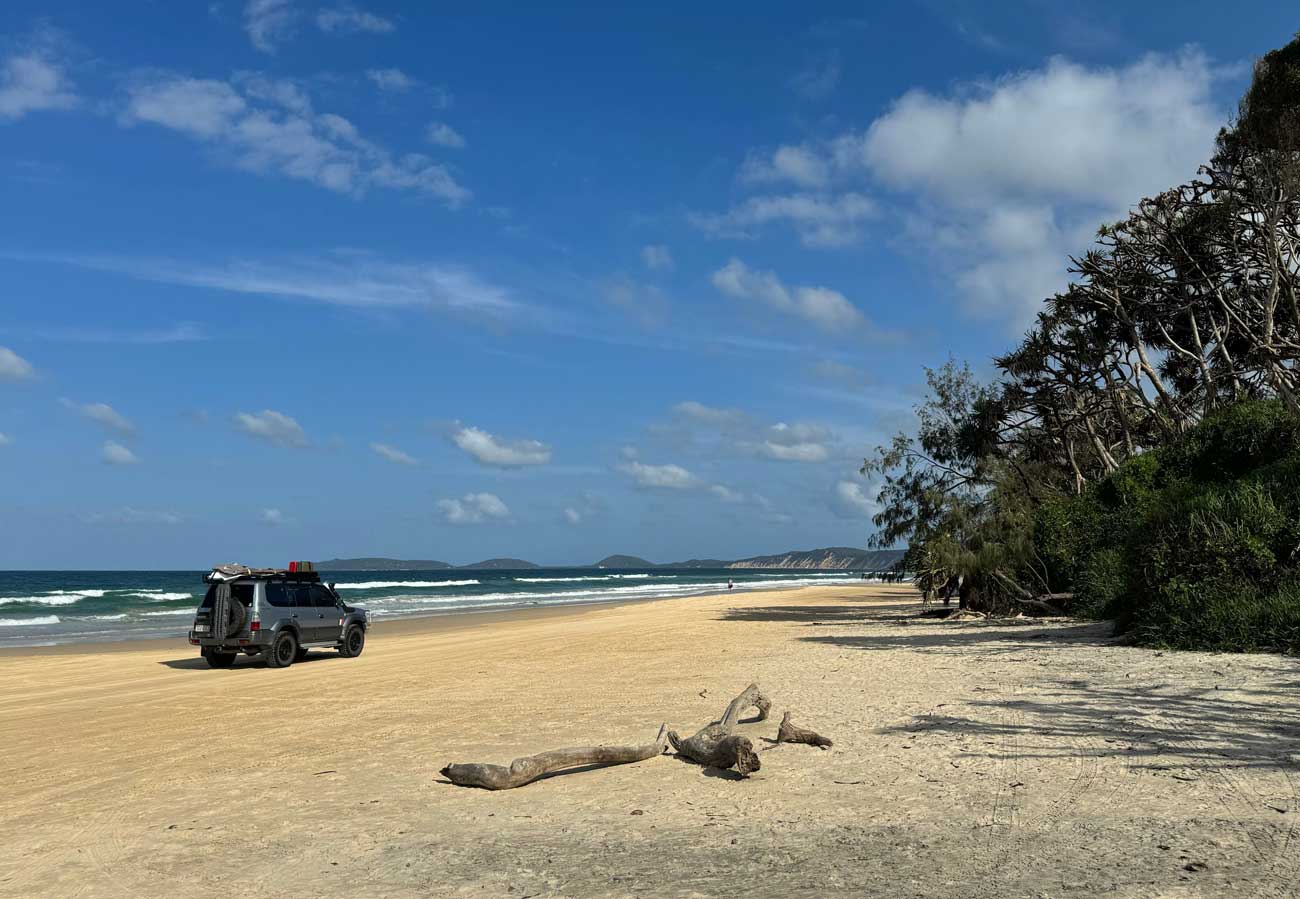
There is nothing quite like pulling into a remote campsite after a long day tackling corrugated dirt tracks, setting up under the trees and reaching into your 12V fridge for a crisp, cold drink. No noisy generators, no melting bag ice turning your food into soggy soup, and no worrying whether your 4WD will turn over when it is time to hit the track the next morning.
Achieving that off-grid freedom comes down to a well-designed 12V power system. But if you are new to off-grid touring, the endless jargon – Amp-hours, DC-DC chargers, BMS, depth of discharge and pure sine wave inverters – can quickly feel overwhelming.
In this practical guide, we will cut through the technical noise and explain everything you need to build, run and maintain a reliable 12V power setup for the Australian bush.
Why a reliable power system matters off-grid
When you travel beyond town grid power and mobile coverage, your 12V system provides essential functionality and safety:
- Refrigeration: Preserves fresh food and cold drinks across multi-day journeys in harsh outback heat.
- Lighting: Runs low-draw LED strip lights and lanterns around camp without draining your starter battery.
- Communications & navigation: Keeps UHF radios, satellite communicators, GPS units and devices powered.
- Safety & recovery gear: Runs 12V air compressors for tyre re-inflation after sand or rock crawling and powers water pumps.
A dual-battery system isolates your vehicle's starter battery from camping loads. Your starter battery stays 100% dedicated to cranking the engine, while your secondary deep-cycle battery runs all camp electronics.
Working out your power needs: Amp-hour calculations
Before selecting batteries or solar panels, you must calculate daily energy usage. In 12V systems, battery capacity is measured in Amp-hours (Ah) – representing how many Amps of electrical current a battery can supply over one hour.
To calculate total daily usage, multiply an appliance's current draw (in Amps) by its daily run time (in hours).
Worked example:
| Appliance / Load | Current Draw (A) | Run Time (hrs/day) | Daily Consumption (Ah/day) | Notes / Duty Cycle |
|---|---|---|---|---|
| 12V Portable Fridge (50L) | 2.5 A | 12.0 h | 30.0 Ah | 50% duty cycle (12 hrs total) |
| LED Camp Lighting | 1.0 A | 4.0 h | 4.0 Ah | Two strips combined |
| Device Charging | 1.0 A | 3.0 h | 3.0 Ah | Phones & camera via 12V USB |
| Total Daily Consumption | — | — | 37.0 Ah/day | Add 15–20% buffer for battery sizing |
Total daily consumption: 30Ah+4Ah+3Ah=37Ah/day
Battery options: AGM vs lithium (LiFePO4)
Deep-cycle batteries supply steady current over continuous periods, unlike engine starting batteries built for short, massive bursts of Cold Cranking Amps (CCA).
1. AGM (Absorbed Glass Mat)
Sealed lead-acid batteries where electrolyte is absorbed in fine glass fibre mats.
- Pros: Lower initial purchase cost; highly resistant to under-bonnet heat and track vibration; spill-proof and maintenance-free.
- Cons: Heavy weight (~30kg for 100Ah); limited Depth of Discharge (DoD) – discharging below 50% capacity damages internal lead plates and shortens battery life.
- Usable Capacity: A 100Ah AGM battery provides 50Ah of usable power.
2. Lithium Iron Phosphate (LiFePO4)
The modern standard for 4WD deep-cycle applications due to inherent safety and high energy density.
- Pros: Extremely lightweight (~10–12kg for 100Ah); high usable capacity (80–100% DoD); flat discharge voltage curve; fast recharge rates; long cycle life (>2,000 cycles).
- Cons: Higher upfront investment; requires dedicated DC-DC charging profiles; sensitive to extreme under-bonnet heat (best mounted in cabs or canopies).
- Usable Capacity: A 100Ah Lithium battery delivers 80Ah to 100Ah of usable power.
Note: Always verify current manufacturer specifications and pricing before purchasing.
Charging sources: Keeping your battery topped up
To remain off-grid, your auxiliary battery requires reliable charging sources:
1. Alternator & DC-DC chargers
Modern vehicle "smart alternators" dynamically lower output voltage for emissions efficiency, which prevents full auxiliary charging. A DC-DC Charger acts as an intelligent multi-stage charger powered by your engine, stepping up voltage to deliver a full 100% charge to AGM or Lithium batteries while driving.
2. Solar power
Provides silent charging when stationary at camp:
- Fixed roof panels: Mounted to roof racks; charge continuously during daylight, but require parking in full sun.
- Portable folding panels & solar blankets: Allow you to park your vehicle in shady trees while placing panels in direct sunlight.
- Solar regulators: Always choose a Maximum Power Point Tracking (MPPT) regulator over older PWM units to harvest up to 30% more solar energy in daylight.
3. Mains / 240V smart chargers
Pre-trip home prep or powered campsite stops allow a 240V multi-stage smart charger to top up batteries and balance cells.
Key components of a bush-ready 12V system
A complete power system integrates several essential control components:
- Battery management system (BMS): Built-in electronic circuit in Lithium batteries that protects cells from over-charging, deep discharge, short circuits, and extreme temperatures.
- Fuses & circuit breakers: Interrupts current if a short circuit occurs, preventing wiring from overheating or catching fire.
- Wiring gauge: Cables must be sized correctly for amperage and distance. Undersized cables cause voltage drop – lowering voltage over cable length and causing appliances to shut down early. Use heavy-gauge cable (e.g. 8 B&S or 6 B&S) for high-draw runs.
- Pure sine wave inverters: Converts 12V DC battery power into clean 240V AC power for charging laptops, camera batteries, or appliances safely.
Installation tips & common bush mistakes
- Fuse placement: Install a high-amp MIDI or ANL fuse within 100–200mm of the battery positive terminal.
- Vibration protection: Securely bolt battery trays down. Wrap cables in split-loom tubing and fit rubber grommets where wires pass through body sheet metal.
- Sealed connections: Use heat-shrink weather-sealed crimp terminals to prevent wire corrosion from outback dust and salt air.
- Dedicated negative returns: Run dedicated negative cabling back to a common negative busbar rather than relying solely on body sheet metal earths.
Safety first
Working with high-amperage 12V DC systems carries real safety responsibilities:
- Short-circuit prevention: An unfused cable rubbing against a metal chassis can short-circuit and cause a vehicle fire in seconds.
- Lithium handling: Never charge Lithium batteries below 0°C or expose them to direct engine bay heat exceeding manufacturer ratings.
- Auto electricians: Consult a licensed auto electrician for complex ECU integration, BMS setup, or heavy cable crimping.
Maintenance & real-world track troubleshooting
- Check terminal tightness: Rough corrugations loosen battery clamps. Wiggle terminals during morning inspections.
- Clean terminal corrosion: Remove white or green sulphate deposits using hot water and a wire brush, then apply protective grease.
- Diagnose voltage drop: If your fridge cuts out despite a charged battery, measure voltage at the fridge socket under load using a digital multimeter to check for undersized wiring.
Sample setups: Weekend trip vs month-long outback tour
| Feature | Weekend camper setup | Month-long outback tourer |
|---|---|---|
| Primary focus | 2–3 day trips, basic fridge & lights | Extended remote off-grid travel |
| Auxiliary battery | 100Ah AGM or 75Ah–100Ah Lithium | 200Ah–300Ah LiFePO4 Lithium |
| In-vehicle DC-DC charger | 20A DC-DC Charger | 40A–50A DC-DC Charger with MPPT solar input |
| Solar replenishment | 120W–160W Folding Solar Panel | 200W Roof Panel + 200W Solar Blanket |
| Inverter capability | 300W Pure Sine Wave (laptops/cameras) | 1000W–2000W Pure Sine Wave |
| Stationary autonomy | 2–3 days without driving | Indefinite with adequate sunlight |
Wrapping up
Building a bush-ready 12V power system comes down to matching your daily Amp-hour consumption with effective battery storage and replenishment.
By selecting the right deep-cycle technology, sizing heavy-gauge cables with inline fuses, and integrating DC-DC and MPPT solar charging, you can enjoy complete off-grid power reliability wherever your 4WD takes you.
Here's what our happy customers say...
John Brophy
Josh Austin
Peter Martinez
Dan Spears
BRENDALE
12 Garret Street
Brendale Qld 4500
Ph: 0413 692 236
CABOOLTURE
6/106 Lear Jet Drive
Caboolture Qld 4510
Ph: (07) 5309 4905
Ph: 0413 430 218
NORTH LAKES
12/88 Flinders Pde
North Lakes Qld 4509
Ph: (07) 3048 2293
Ph: 0423 369 353